What Is a Local Citation Service?

A local citation service helps businesses manage their online business information across relevant directories, business listing platforms, maps services, and industry-specific websites.
When customers search for a local business, they need accurate information to find the right company. They may want to check its address, call its phone number, visit its website, or learn about the services it provides.
A local citation typically includes a business name, address, and phone number, commonly known as NAP. Depending on the platform, a listing may also include the website URL, business category, opening hours, business description, and other useful details.
However, simply creating hundreds of listings does not guarantee better Google rankings. The relevance of the directory, accuracy of the information, and quality of the overall local SEO strategy also matter.
A professional local citation building service starts by reviewing the business's existing listings, identifying errors, selecting appropriate directories, and submitting accurate information where suitable.
At Local SEO Pro, we help businesses review their citation needs, improve business information consistency, and identify relevant local listing opportunities. Our approach focuses on accuracy, relevance, and transparent reporting rather than increasing citation numbers without a clear purpose.
In this guide, you will learn how local citations work, which types of websites may be suitable, how to audit existing listings, how to build citations step by step, and how to avoid common mistakes.
1. Why Are Local Citations Important for Local SEO?
Local citations help establish a consistent online presence for a business.
Imagine that a plumbing company appears in several business directories. One directory displays its current phone number, another shows an old number, and a third lists an outdated address.
Customers may become confused about which information is correct.
This is why businesses should periodically review their online listings and correct inaccurate information.
Benefits of maintaining accurate citations
Improved information consistency
Accurate business details make it easier for customers to identify the correct business across different platforms.
Better business discoverability
Relevant directories may help customers discover businesses while searching for specific services or locations.
More opportunities for customer contact
Depending on the directory, customers may be able to call the business, visit its website, request directions, or learn about its services.
Support for local SEO
Relevant and accurate business information can support a broader local SEO strategy. However, citations alone cannot guarantee higher rankings.
Improved business credibility
Consistent details across trustworthy platforms can reduce confusion and help customers feel more confident about contacting a business.
Do more citations always mean better rankings?
No.
A business does not necessarily need hundreds of low-quality listings. A smaller set of accurate, relevant directories may be more useful than a large collection of unrelated websites.
Businesses should prioritize quality, accuracy, and relevance instead of focusing only on citation quantity.
2. What Is NAP Consistency?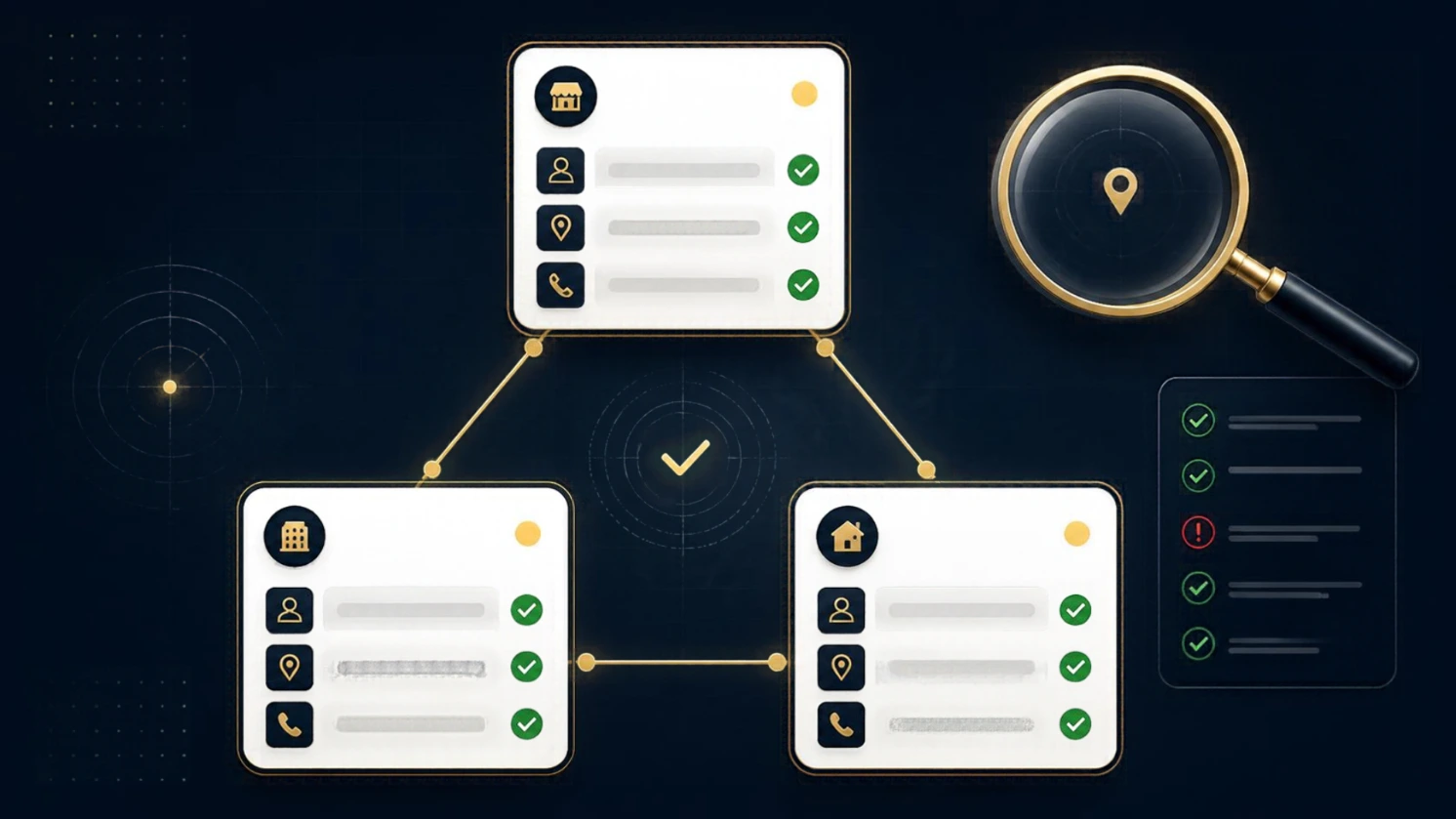
NAP stands for:
- N — Name
- A — Address
- P — Phone Number
NAP consistency means maintaining accurate and consistent business name, address, and phone information across relevant online listings.
For example, suppose a business uses the name:
ABC Home Maintenance
One directory lists the business as ABC Home Maintenance, while another uses a different business name that does not reflect its real-world identity.
If the difference is caused by an outdated or incorrect listing, it should be investigated and corrected where possible.
What business information should you check?
During a citation audit, review:
- Official business name.
- Physical address or eligible service-area information.
- Business phone number.
- Official website URL.
- Primary business category.
- Additional categories, where supported.
- Opening hours.
- Business description.
- Social media links, where relevant.
- Duplicate or outdated listings.
Not every directory supports every field. Provide only information that is accurate and appropriate for that platform.
Should every directory show exactly the same information?
The core business identity should remain accurate and consistent.
However, some platforms have different field requirements. For example, one directory may support additional categories while another allows only one.
Do not add inaccurate information simply to make every listing look identical.
Best practice: Maintain a master business information sheet and use it when creating or updating listings.
3. Structured and Unstructured Citations: What Is the Difference?
Understanding citation types helps businesses identify different opportunities to improve their online presence.
Structured citations
A structured citation appears in an organized business listing or directory.
The website usually provides separate fields for business name, address, phone number, category, and website.
Examples include:
- General business directories.
- Local business directories.
- Industry-specific directories.
- Eligible business listings on mapping platforms.
These platforms are designed to organize business information.
Unstructured citations
An unstructured citation is a business mention within ordinary online content rather than a standardized directory listing.
Examples may include:
- A local newspaper article mentioning a business.
- A chamber of commerce article featuring a member.
- A local organization publishing a business profile.
- A relevant industry publication mentioning a company.
An unstructured citation may or may not include a clickable link.
Which type should a business prioritize?
Both types can have a place in a local SEO strategy.
Structured citations help businesses maintain information across relevant directories. Unstructured mentions may help customers discover a business through useful articles, community coverage, and industry-related content.
The best approach depends on the business, its market, and the opportunities available.
4. Which Websites Are Suitable for Local Citations?
One of the most important steps in citation building is selecting appropriate websites.
There is no single directory list that works equally well for every business in every country.
A directory suitable for an American plumber may not be relevant to a Saudi Arabian marketing agency. Similarly, a healthcare directory may not be useful for an automotive repair business.
Therefore, citation opportunities should be selected according to country, location, industry, eligibility, and directory quality.
A. Major business listing platforms
These platforms may be useful starting points, depending on country availability and business eligibility.
Google Business Profile
Official website: https://www.google.com/business/
Google Business Profile allows eligible businesses to manage how their information appears on Google Search and Maps.
It is not an ordinary third-party citation directory, but it is an important part of many local businesses' online presence.
Businesses must follow Google's eligibility and representation guidelines.
Bing Places
Official website: https://www.bingplaces.com/
Bing Places allows eligible businesses to manage their business information for Bing's local search experience.
Apple Business Connect
Official website: https://businessconnect.apple.com/
Apple Business Connect allows businesses to manage information associated with their presence across Apple services, including Maps.
Yelp for Business
Official website: https://business.yelp.com/
Yelp may be relevant for businesses operating in markets where the platform is actively used and supports their business category.
Foursquare
Official website: https://foursquare.com/
Foursquare provides location-related data and business discovery services. Businesses should check which listing and data-management options are currently available for their needs.
These are examples of major platforms, not a guarantee that every platform will accept every business or provide the same features in every country.
B. Local business directories
Local directories focus on businesses within a particular city, region, or community.
Examples of potential opportunities include:
- City business directories.
- Regional business associations.
- Local chamber of commerce directories.
- Community business directories.
- Local service provider directories.
For example, a business serving customers in Dammam may benefit from relevant Saudi Arabian and Eastern Province business resources, provided they accept the business category and location.
A business in Toronto should investigate relevant Canadian and local Toronto directories instead of automatically using a Saudi Arabian list.
| Business type | Directory opportunities to investigate |
|---|---|
| Plumbers | Plumbing and home-service directories |
| HVAC and AC repair | HVAC and contractor directories |
| Electricians | Electrical contractor directories |
| Cleaning companies | Cleaning and home-service directories |
| Auto repair shops | Automotive directories |
| Restaurants | Restaurant discovery and food directories |
| Healthcare providers | Eligible healthcare directories |
| Legal professionals | Appropriate legal directories |
| Real estate businesses | Relevant property and professional directories |
The actual directory must be evaluated before submission. A website's category should genuinely match the business.
D. USA citation opportunities
For businesses serving the United States, investigate relevant options such as:
- Google Business Profile.
- Bing Places.
- Apple Business Connect.
- Yelp.
- Local chamber of commerce directories.
- Regional business directories.
- Relevant industry-specific directories.
The most suitable choices depend on the business's location, category, and eligibility.
E. Canada citation opportunities
For Canadian businesses, investigate:
- Google Business Profile.
- Bing Places.
- Apple Business Connect.
- Yelp Canada, where relevant.
- Local chamber of commerce directories.
- Regional business associations.
- Industry-specific Canadian directories.
A directory should not be selected simply because it accepts submissions. It should also make sense for the business and its target market.
F. Saudi Arabia citation opportunities
For businesses operating in Saudi Arabia, investigate:
- Relevant Saudi business directories.
- Regional business directories.
- Eligible industry-specific listings.
- Local business associations.
- Appropriate mapping and discovery platforms.
- Official business resources relevant to the business category.
For example, a company serving Dammam, Dhahran, Al Khobar, or Al Qatif should prioritize directories relevant to its actual service area.
Do not create an inaccurate address or claim a physical storefront that does not exist.
How do you decide whether a directory is worth using?
Before submitting a listing, ask:
- Is the website relevant to the business category?
- Does it cover the correct country or location?
- Does it accept this type of business?
- Can the listing be claimed or managed later?
- Does the website have a legitimate purpose?
- Is the submission process transparent?
- Can the listing's status be checked?
- Is the website asking for unnecessary or suspicious information?
These checks help prevent wasted effort on irrelevant or low-quality sites.
5. How to Build Local Citations Step by Step
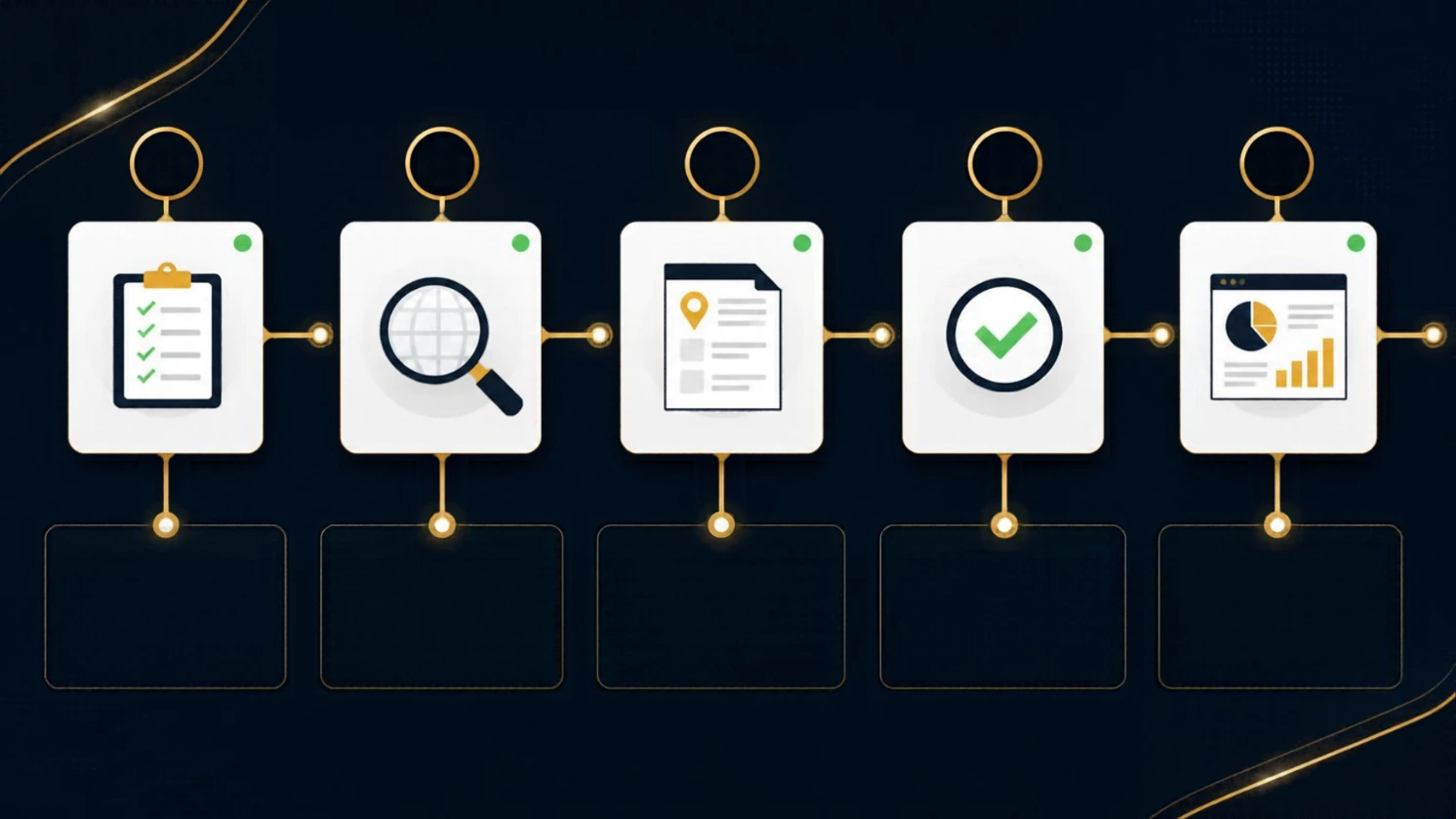
A professional local citation building service should follow a clear process.
Step 1: Collect accurate business information
Prepare a master business information sheet containing:
- Official business name.
- Accurate address or eligible service-area details.
- Business phone number.
- Website URL.
- Business category.
- Opening hours.
- Business description.
- Relevant social media profiles.
The details must reflect the real business.
Step 2: Audit existing listings
Search for the business name, phone number, address, and website.
Review relevant directories to identify:
- Existing accurate listings.
- Incorrect business details.
- Duplicate listings.
- Outdated phone numbers.
- Old addresses.
- Missing website links.
- Unclaimed listings, where applicable.
Record the results in a spreadsheet.
Step 3: Prioritize the directory list
Do not start by submitting the business to every website available.
Instead, divide potential directories into categories:
- Major platforms.
- Relevant local directories.
- Industry-specific directories.
- Additional credible business resources.
Prioritize the most relevant opportunities first.
Step 4: Check whether the business already exists
Before creating a new listing, search the directory for existing records.
If a listing already exists, determine whether it can be claimed or corrected.
Creating another listing without checking may create unnecessary duplicates.
Step 5: Submit accurate business details
Complete the required fields carefully.
Use the official business information sheet and follow the directory's submission rules.
If the directory requires verification, complete the appropriate verification process.
Do not submit fake information or use a misleading business category.
Step 6: Track submission status
Record each listing's status.
Suggested statuses include:
- Not Started.
- Submitted.
- Verification Required.
- Pending Review.
- Published.
- Correction Needed.
- Rejected.
- Duplicate Found.
A submitted listing is not necessarily a published listing.
Step 7: Verify live listings
When a directory publishes the listing, open it and confirm that the information is correct.
Check the business name, phone number, address, website URL, and category.
If the listing is incorrect, document the issue and correct it where possible.
Step 8: Provide a completion report
The final report should show which listings were submitted, which were published, which need verification, and which could not be completed.
This makes the service more transparent and easier for the customer to understand.
6. What Is Local Citation Cleanup?
Local citation cleanup focuses on correcting problems in existing business listings.
A business may have moved to a new address, changed its phone number, updated its name, or discovered duplicate listings.
In these cases, creating more listings may not solve the underlying problem.
Common citation problems
Incorrect phone number
An old phone number may prevent customers from contacting the business.
Outdated address
A directory may still display an address the business no longer uses.
Duplicate listings
The same business may appear multiple times in a directory.
Incorrect website URL
A listing may point to an outdated or broken website.
Incorrect business category
The listing may describe the business incorrectly.
Inconsistent business name
An old or inaccurate name may remain visible online.
How should these problems be fixed?
- Identify the incorrect listing.
- Confirm the correct business details.
- Check whether the listing can be claimed.
- Request or make the appropriate correction.
- Follow the directory's verification process.
- Check whether the change becomes visible.
- Record the outcome in the citation report.
Some directories may take time to review changes. Others may require verification or additional documentation.
Do not promise that every listing can be corrected or removed. The directory ultimately controls its own platform.
7. Common Local Citation Building Mistakes
A strong citation strategy focuses on accuracy and relevance.
Here are common mistakes businesses should avoid.
Mistake 1: Focusing only on citation quantity
A large number of irrelevant listings is not automatically better than a smaller number of useful ones.
Better approach: Prioritize relevant directories and accurate business information.
Mistake 2: Ignoring existing listings
Creating new listings without checking existing records can lead to duplicates.
Better approach: Perform an audit before starting new submissions.
Mistake 3: Using incorrect business details
Submitting inconsistent or invented information can confuse customers.
Better approach: Maintain a master business information sheet.
Mistake 4: Choosing irrelevant directories
A directory that does not serve the business's location or category may provide little practical value.
Better approach: Evaluate geographic and industry relevance.
Mistake 5: Treating every submission as a live listing
A submission may be rejected, delayed, or require verification.
Better approach: Report submitted and published listings separately.
Mistake 6: Using misleading business names
Adding unrelated keywords to a business name may violate directory rules.
Better approach: Use the business name that accurately represents the company in the real world.
Mistake 7: Promising guaranteed rankings
Citation building alone cannot guarantee a particular Google ranking.
Better approach: Explain the service's scope honestly and treat citations as one component of a wider local SEO strategy.
Mistake 8: Ignoring maintenance
Business information may become outdated over time.
Better approach: Review important listings when business details change and periodically check for new issues.
8. How to Choose a Local Citation Service Provider
Businesses should evaluate a citation service based on more than its advertised number of submissions.
Before hiring a provider, ask the following questions.
Does the provider explain which directories will be used?
You should be able to understand the types of websites included in the service.
Does the provider check existing citations?
An audit can help identify errors and duplicates before additional listings are created.
Does the provider distinguish between submitted and published listings?
A transparent provider should report what was submitted and what became live.
Does the provider explain its cleanup process?
New citation building and correcting existing listings are different tasks. Confirm which services are included.
Does the provider provide a report?
The report should help you understand the work completed and any remaining issues.
Does the provider make realistic promises?
Be cautious of guarantees about Google rankings or claims that a fixed number of citations will produce a particular position.
Is the pricing and scope clear?
Before purchasing, confirm the number and types of submissions, cleanup work, verification requirements, reporting, and any recurring fees.
These questions help businesses compare services according to their actual needs.
The actual directory must be evaluated before submission. A website's category should genuinely match the business.
D. USA citation opportunities
For businesses serving the United States, investigate relevant options such as:
- Google Business Profile.
- Bing Places.
- Apple Business Connect.
- Yelp.
- Local chamber of commerce directories.
- Regional business directories.
- Relevant industry-specific directories.
The most suitable choices depend on the business's location, category, and eligibility.
E. Canada citation opportunities
For Canadian businesses, investigate:
- Google Business Profile.
- Bing Places.
- Apple Business Connect.
- Yelp Canada, where relevant.
- Local chamber of commerce directories.
- Regional business associations.
- Industry-specific Canadian directories.
A directory should not be selected simply because it accepts submissions. It should also make sense for the business and its target market.
F. Saudi Arabia citation opportunities
For businesses operating in Saudi Arabia, investigate:
- Relevant Saudi business directories.
- Regional business directories.
- Eligible industry-specific listings.
- Local business associations.
- Appropriate mapping and discovery platforms.
- Official business resources relevant to the business category.
For example, a company serving Dammam, Dhahran, Al Khobar, or Al Qatif should prioritize directories relevant to its actual service area.
Do not create an inaccurate address or claim a physical storefront that does not exist.
How do you decide whether a directory is worth using?
Before submitting a listing, ask:
- Is the website relevant to the business category?
- Does it cover the correct country or location?
- Does it accept this type of business?
- Can the listing be claimed or managed later?
- Does the website have a legitimate purpose?
- Is the submission process transparent?
- Can the listing's status be checked?
- Is the website asking for unnecessary or suspicious information?
These checks help prevent wasted effort on irrelevant or low-quality sites.
5. How to Build Local Citations Step by Step
A professional local citation building service should follow a clear process.
Step 1: Collect accurate business information
Prepare a master business information sheet containing:
- Official business name.
- Accurate address or eligible service-area details.
- Business phone number.
- Website URL.
- Business category.
- Opening hours.
- Business description.
- Relevant social media profiles.
The details must reflect the real business.
Step 2: Audit existing listings
Search for the business name, phone number, address, and website.
Review relevant directories to identify:
- Existing accurate listings.
- Incorrect business details.
- Duplicate listings.
- Outdated phone numbers.
- Old addresses.
- Missing website links.
- Unclaimed listings, where applicable.
Record the results in a spreadsheet.
Step 3: Prioritize the directory list
Do not start by submitting the business to every website available.
Instead, divide potential directories into categories:
- Major platforms.
- Relevant local directories.
- Industry-specific directories.
- Additional credible business resources.
Prioritize the most relevant opportunities first.
Step 4: Check whether the business already exists
Before creating a new listing, search the directory for existing records.
If a listing already exists, determine whether it can be claimed or corrected.
Creating another listing without checking may create unnecessary duplicates.
Step 5: Submit accurate business details
Complete the required fields carefully.
Use the official business information sheet and follow the directory's submission rules.
If the directory requires verification, complete the appropriate verification process.
Do not submit fake information or use a misleading business category.
Step 6: Track submission status
Record each listing's status.
Suggested statuses include:
- Not Started.
- Submitted.
- Verification Required.
- Pending Review.
- Published.
- Correction Needed.
- Rejected.
- Duplicate Found.
A submitted listing is not necessarily a published listing.
Step 7: Verify live listings
When a directory publishes the listing, open it and confirm that the information is correct.
Check the business name, phone number, address, website URL, and category.
If the listing is incorrect, document the issue and correct it where possible.
Step 8: Provide a completion report
The final report should show which listings were submitted, which were published, which need verification, and which could not be completed.
This makes the service more transparent and easier for the customer to understand.
6. What Is Local Citation Cleanup?
Local citation cleanup focuses on correcting problems in existing business listings.
A business may have moved to a new address, changed its phone number, updated its name, or discovered duplicate listings.
In these cases, creating more listings may not solve the underlying problem.
Common citation problems
Incorrect phone number
An old phone number may prevent customers from contacting the business.
Outdated address
A directory may still display an address the business no longer uses.
Duplicate listings
The same business may appear multiple times in a directory.
Incorrect website URL
A listing may point to an outdated or broken website.
Incorrect business category
The listing may describe the business incorrectly.
Inconsistent business name
An old or inaccurate name may remain visible online.
How should these problems be fixed?
- Identify the incorrect listing.
- Confirm the correct business details.
- Check whether the listing can be claimed.
- Request or make the appropriate correction.
- Follow the directory's verification process.
- Check whether the change becomes visible.
- Record the outcome in the citation report.
Some directories may take time to review changes. Others may require verification or additional documentation.
Do not promise that every listing can be corrected or removed. The directory ultimately controls its own platform.
7. Common Local Citation Building Mistakes
A strong citation strategy focuses on accuracy and relevance.
Here are common mistakes businesses should avoid.
Mistake 1: Focusing only on citation quantity
A large number of irrelevant listings is not automatically better than a smaller number of useful ones.
Better approach: Prioritize relevant directories and accurate business information.
Mistake 2: Ignoring existing listings
Creating new listings without checking existing records can lead to duplicates.
Better approach: Perform an audit before starting new submissions.
Mistake 3: Using incorrect business details
Submitting inconsistent or invented information can confuse customers.
Better approach: Maintain a master business information sheet.
Mistake 4: Choosing irrelevant directories
A directory that does not serve the business's location or category may provide little practical value.
Better approach: Evaluate geographic and industry relevance.
Mistake 5: Treating every submission as a live listing
A submission may be rejected, delayed, or require verification.
Better approach: Report submitted and published listings separately.
Mistake 6: Using misleading business names
Adding unrelated keywords to a business name may violate directory rules.
Better approach: Use the business name that accurately represents the company in the real world.
Mistake 7: Promising guaranteed rankings
Citation building alone cannot guarantee a particular Google ranking.
Better approach: Explain the service's scope honestly and treat citations as one component of a wider local SEO strategy.
Mistake 8: Ignoring maintenance
Business information may become outdated over time.
Better approach: Review important listings when business details change and periodically check for new issues.
8. How to Choose a Local Citation Service Provider
Businesses should evaluate a citation service based on more than its advertised number of submissions.
Before hiring a provider, ask the following questions.
Does the provider explain which directories will be used?
You should be able to understand the types of websites included in the service.
Does the provider check existing citations?
An audit can help identify errors and duplicates before additional listings are created.
Does the provider distinguish between submitted and published listings?
A transparent provider should report what was submitted and what became live.
Does the provider explain its cleanup process?
New citation building and correcting existing listings are different tasks. Confirm which services are included.
Does the provider provide a report?
The report should help you understand the work completed and any remaining issues.
Does the provider make realistic promises?
Be cautious of guarantees about Google rankings or claims that a fixed number of citations will produce a particular position.
Is the pricing and scope clear?
Before purchasing, confirm the number and types of submissions, cleanup work, verification requirements, reporting, and any recurring fees.
These questions help businesses compare services according to their actual needs.
9. What Should a Local Citation Building Report Include?
A useful report should make it easy for the customer to understand the work completed.
For services that include reporting, the report may contain the following fields:
| Field | Purpose |
|---|---|
| Directory Name | Identifies the website |
| Directory URL | Provides access to the listing |
| Business Name | Shows the submitted business name |
| Submission Date | Records when the listing was submitted |
| Submission Status | Shows whether submission was completed |
| Publication Status | Indicates whether the listing is live |
| Website URL | Records the website linked to the listing |
| Issues Found | Documents relevant problems |
| Corrections Made | Records completed corrections |
| Pending Actions | Identifies unresolved items |
The report should reflect actual work completed. Do not mark a listing as published unless publication has been verified.
This approach makes citation work easier to audit and maintain.
10. Frequently Asked Questions
What is a local citation service?
A local citation service helps businesses create, review, update, or correct their information across relevant online directories and business listing platforms.
How many local citations does a business need?
There is no universal number that guarantees success. The appropriate number depends on the business, country, industry, existing listings, and relevant directory opportunities.
Do local citations guarantee higher Google rankings?
No. Citations are only one part of local SEO. Google considers multiple signals, and no citation service can guarantee a specific ranking.
What is the difference between citation building and citation cleanup?
Citation building focuses on creating new listings. Citation cleanup focuses on correcting existing errors, outdated information, and duplicate records.
What does NAP consistency mean?
NAP consistency means keeping the business name, address, and phone number accurate and consistent across relevant listings.
Should every business use the same citation sites?
No. Directory suitability depends on the business category, country, location, and eligibility requirements.
Can a business create citations without a website?
Some directories allow eligible businesses to create listings without a website. However, website requirements vary by platform, and not every business qualifies for every listing service.
How long does citation building take?
The timeline depends on the directory's submission, review, and verification process. Some listings may appear quickly, while others can take longer or may not be approved.
Should existing listings be checked before creating new ones?
Yes. Reviewing existing listings helps identify duplicates and incorrect information before additional submissions are made.
What should I look for in a citation building report?
Look for directory names, listing URLs, submission status, verified publication status, identified errors, corrections, and pending actions.
11. How Local SEO Pro Can Help
Accurate business information is an important part of building a reliable local online presence.
At Local SEO Pro, we help businesses review their local citation needs, identify relevant directory opportunities, and improve the consistency of their online business information.
Our local SEO services include:
- Local Citation Building & NAP Consistency.
- Google Business Profile Optimization & Management.
- Local SEO Audit & Competitor Analysis.
- Local Keyword Research & On-Page SEO.
- Google Maps Optimization.
- Online Reputation & Review Management.
The exact work included depends on the agreed service scope.
We focus on accurate business information, relevant listing opportunities, and practical recommendations that support a broader local SEO strategy.
Want to improve the accuracy of your business listings?
Contact Local SEO Pro to discuss your local citation and NAP consistency needs.
Visit our Services page to learn more about our local SEO services, or contact us to discuss your business requirements.